|
A BRIEF HISTORY OF CHURCH MONUMENTS IN ENGLAND
BY PROFESSOR BRIAN KEMP, VICE-PRESIDENT
The history of church monuments is a fascinating story of
enormous developments from very small beginnings. The
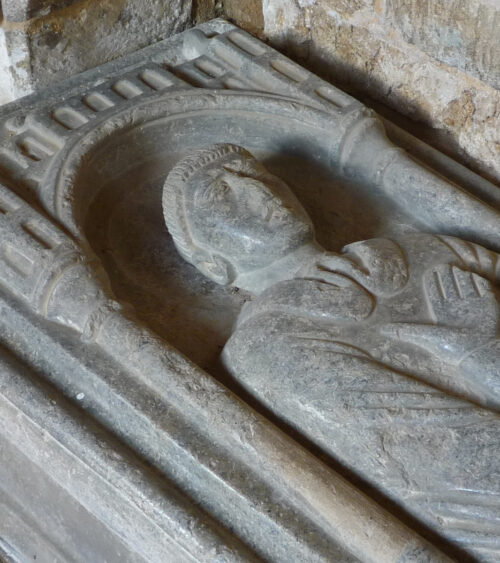
earliest monuments were simply carved grave-slabs or coffin
lids, some with a low relief effigy of the deceased, as in
the twelfth-century cases of Bishops Roger and Jocelin de
Bohun (died 1139 and 1184) in Salisbury Cathedral. Gradually
effigies were carved in even greater relief, finishing up
completely in the round and visually free of their slabs.
Various materials were used, including wood and metal, but
in the later medieval period most of the finest monuments
were those made of alabaster. By that time, too, effigies
were usually set upon rectangular tomb- chests, not actually
containing the bodies of the deceased, but enriched with
delightful carvings of foliage, heraldry or figures of
weepers, angels and saints. Fine collections can be seen at
Harewood (Yorkshire), Abergavenny (Monmouthshire), Tong
(Shropshire) and elsewhere. The grandest monuments of the
Middle Ages incorporated also an ornamental stone canopy,
similarly richly ornamented, excellent examples of which
occur at Tewkesbury Abbey (Gloucestershire). In the
fifteenth century the representation of the deceased as a
corpse in a shroud first appeared in England and, although
never a common feature, endured in various forms into the
seventeenth century. A good deal of painted and/or carved
religious imagery adorned medieval monuments, but the vast
bulk of this was destroyed during the Reformation in the
sixteenth century or in the period of Puritan iconoclasm in
the seventeenth.
Apart from the Reformation, by far the most influential
effect on the design and character of monuments in the
sixteenth century was due to the Renaissance. Although its
progress in Britain was on the whole slow at first,
Renaissance ornament began to be applied to late medieval
monumental forms from the second decade of the sixteenth
century, and in time the structures of monuments gradually
adopted Renaissance elements, such as round coffered arches,
classical entablatures and classical columns, and these had
quite transformed the appearance of monuments by the middle
of Elizabeth l's reign. At the same time increasing
diversity in the depiction of effigies of the deceased saw
the introduction of the reclining, kneeling, seated and
standing postures alongside the older recumbent form, as
well as demi-figures or half-effigies. These trends were
greatly accelerated by the first wave of foreign influence
on British designs when, in the later sixteenth century,
important craftsmen and artists from the Netherlands settled
in England, fleeing war and religious persecution in their
homeland. Hundreds of their monuments survive from the
Elizabethan and early Stuart periods, especially in
Westminster Abbey, Bisham (Berkshire) and Bottesford
(Leicestershire). Also becoming increasingly common were
monuments fixed to the walls and hanging free of any support
from the floor.
A purer form of classicism took root in the course of
the seventeenth century and developed eventually into the
gloriously grandiose Baroque style of the later seventeenth
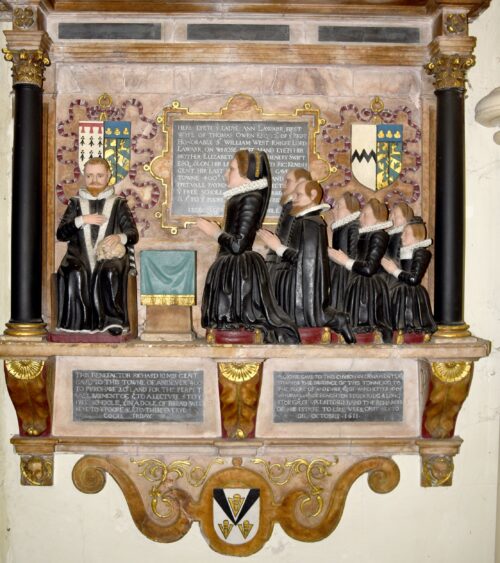
and early eighteenth century, when effigies, singly or in
family groups, might be displayed in grand compositions in
richly splendid settings. Impressive examples can be seen at
Exton (Rutland), Bletchingley (Surrey), Knebworth
(Hertfordshire) and Coxwold (Yorkshire). In the same period
the representation of the deceased as a bust or in a relief
medallion portrait also made their appearance. The
eighteenth century saw a decline in the use of great
monumental canopies and architectural backplates in favour
of a new feature, the two dimensional pyramid, rising at the
back of monuments and giving them a distinctive shape
supremely characteristic of the eighteenth century. Some
huge compositions of this kind were produced, of variously
coloured marbles and containing several figures, including
the magnificent piece for Lord Foley (died 1733) at Great
Witley (Worcestershire). The period also saw the flowering
of the Rococo style, that delightfully decorative, even
playful, version of Baroque associated especially with
France and Austria.
The inevitable reaction to both this extrovert grandeur
and intricate detail came in the later eighteenth century
with the rise of Neoclassicism, and in particular the switch
in focus from ancient Rome to ancient Greece. The Greek
revival, greatly enhanced in the early nineteenth century by
the arrival of the Elgin Marbles from the Parthenon,
constituted the most significant and dominant aspect of
church monuments in that period; it is evident in the great
early nineteenth-century series of monuments to statesmen
and military figures in St Paul's Cathedral and, almost
ubiquitously, in the widespread popularity of
relief-carvings of the deceased and other figures placed in
white marble settings based on ancient Greek 'stele'
tomb-stones. At the same time, the first stages of the
Gothic Revival were quietly getting underway, without as yet
challenging the ascendancy of Neoclassicism.
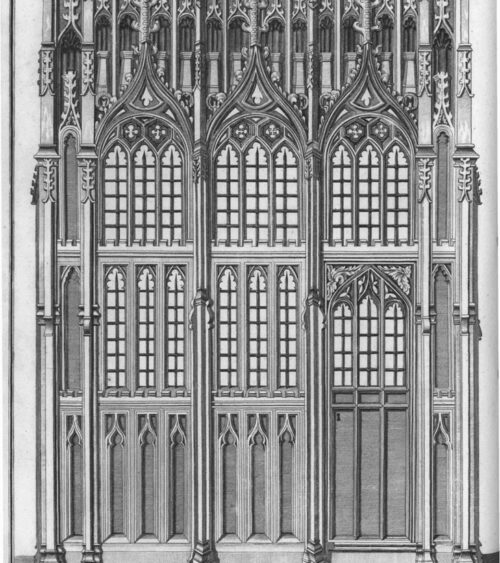
It was in the second half of the nineteenth century, in
the high Victorian period, that Gothic influence and
medievalism in general, exerted their greatest influence on
the design and character of monuments. Not only were
monuments designed with Gothic tomb-chests and canopies
(thought usually not slavish copies of original medieval
examples), as for Bishop Samuel Wilberforce (died 1873) in
Winchester Cathedral, but there was also a renewed fashion
for the completely recumbent effigy, which since the
seventeenth century had been largely eclipsed by some of the
alternative postures mentioned above. However, other styles
and ways of depicting the deceased continued to flourish,
and the Victorian period was an age of eclecticism rather
than one exclusively dominated by the Gothic.
In due course other artistic movements, such as Art
Nouveau, exerted an influence on the makers of monuments,
but religious and social attitudes in the twentieth century,
especially after the First World War, did not generally
favour the erection of large monuments to individual, and
the centuries-old habit (as it were) effectively died out.
This introductory survey has concentrated on monuments
with effigies, but it is important to note that some
monuments in the Middle Ages, and an increasing number from
the sixteenth century onwards, did not include an effigy or
representation of the deceased in any form. Some focused
attention on long inscriptions, particularly wall tablets
from the seventeenth century on, while others got their
message across through symbolic or allegorical displays,
including putti engaged in various activities, female
personifications of the Virtues, allusions to the career of
the deceased, and so on.
top of page
|